
Setting up an accounting system for a new nonprofit is a daunting task. But before you can start recording dollars and cents, you must choose which accounting method is the best fit for your organization – cash or accrual.
The cash and accrual methods of accounting both have their place, but they tell very different stories about an organization’s financial health. Understanding these differences will help you make the right choice for your nonprofit and will enable you to work more effectively you’re your board, funders, and other stakeholders.
Cash Accounting: Simple and Immediate
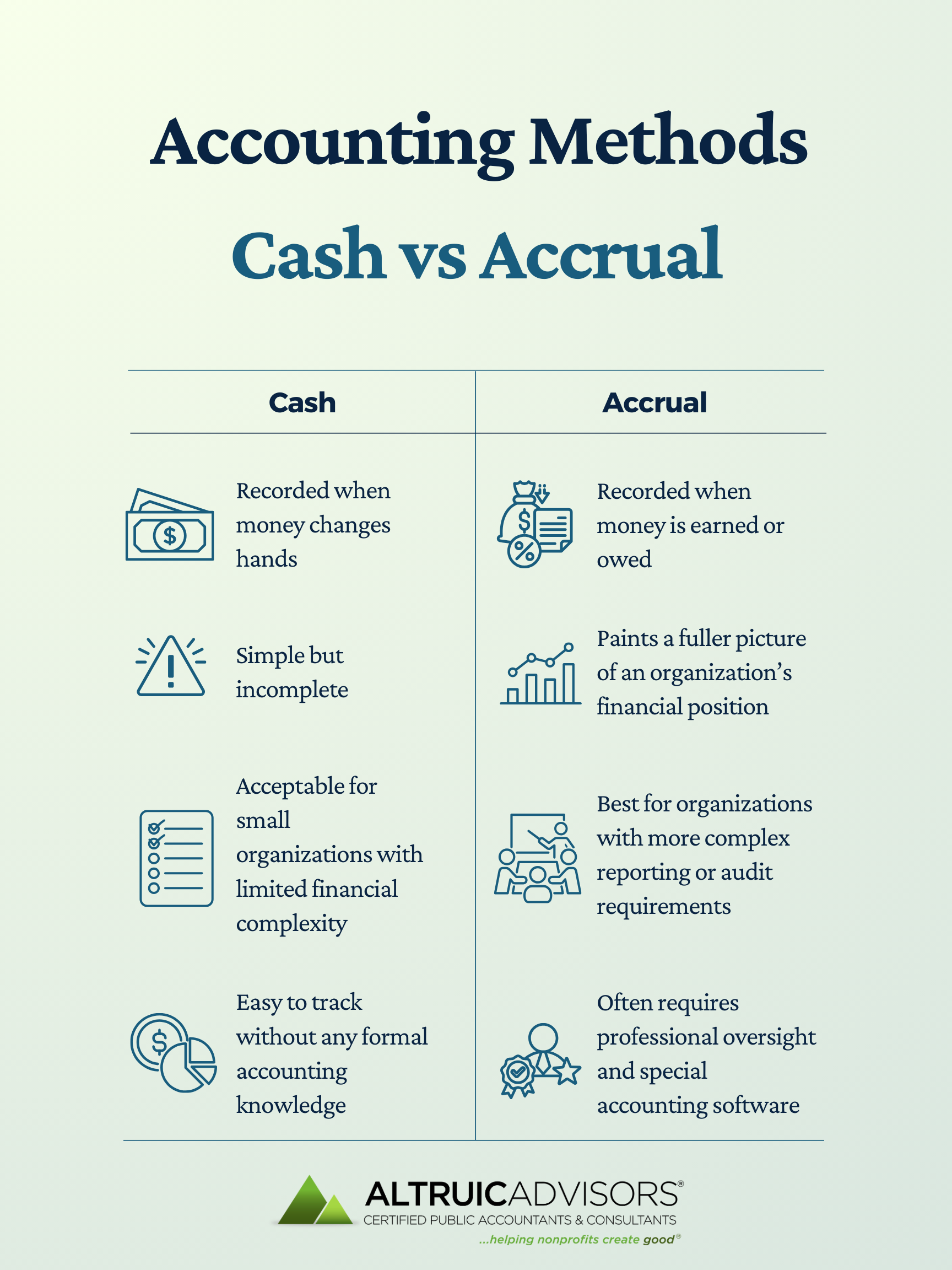
Under the cash accounting method, you record revenue when money is received and you will record expenses when money is paid. It’s as simple and straightforward as a checkbook register. If a donor writes your nonprofit a $5,000 check in June, it shows up as income in June (even if the gift was pledged way back in March). If you pay rent in July, the expense hits your books in July, no matter what date appears on the invoice.
The biggest advantage of this method is its simplicity. Small nonprofits often prefer the cash method of accounting because it is easy to track, and does not require any formal accounting knowledge or special bookkeeping software.
For example, imagine a nonprofit that receives most of its funding in December during a year-end holiday campaign. Under the cash accounting method, the books would show a surge of income in December and little to no income the rest of the year. This paints a lopsided picture, but it’s easy to track and aligns with when cash is actually in the bank.
However, simplicity comes at a cost. Cash basis accounting doesn’t give a complete picture of financial obligations or long-term stability. If your nonprofit has a $50,000 grant pledged but not yet received, it won’t appear in your financial statements. Likewise, unpaid bills don’t show up until the day they’re paid. This can make it harder to plan, especially if you have large receivables or long-term financial obligations.
Accrual Accounting: The Bigger Picture
Under the accrual accounting method, you record income when it is earned and expenses when they are incurred—regardless of when cash actually changes hands. If a donor pledges $10,000 in April, you would record that revenue in April…even if the check doesn’t show up until September. If your organization receives an invoice for program supplies in June, it’s recorded in your books as a June expense, no matter when you actually pay the bill.
This approach provides a more accurate, long-term view of your nonprofit’s financial position. For larger organizations with more complicated accounting or reporting needs, accrual accounting often makes more sense. This method is also required for nonprofits who receive contributions or grants above certain thresholds, or for those seeking audits.
For example, consider a nonprofit that receives multiple pledges from January through March, which are paid in a lump sum in April. Under the accrual accounting method, this would appear as steady income throughout the first quarter of the year. This creates a more accurate picture of their financial position and makes it easier to budget and plan.
The downside? With accrual accounting, those numbers don’t always match the balance in your bank account, so you have to pay closer attention to cash flow. Accrual basis accounting is also more complex and typically requires professional oversight. Smaller nonprofits without trained staff or accounting software may find it difficult and unnecessary.
Choosing the Right Method
For many small nonprofits, the cash method of accounting may be perfectly adequate, especially if your funding is simple and transactions are limited. But as organizations grow, accrual accounting almost always becomes necessary. The accrual method may also be required if your organization:
Relies heavily on grants and pledges
Has contracts or obligations that extend over several fiscal years
Needs to present audited financial statements to funders or other parties
Both cash and accrual accounting have their place in the nonprofit world. The cash method offers simplicity and ease, but it risks hiding the bigger financial picture. The accrual method requires more effort, but gives a greater understanding of the organization’s financial status.
The best choice depends on your nonprofit’s size, complexity, and reporting needs. Some organizations even use both methods – using accrual accounting for official reports and audits, while tracking cash separately to ensure there’s always enough in the bank.
No matter which accounting method you choose, it’s important to keep clear, accurate, and timely financial records to support your goals and help make informed decisions.